
This initial encounter ignited a passion for blending math and art, disrupting geometry, and exploring the beauty of asymmetry. It’s a passion he has carried forward, continually pushing the boundaries of digital creativity.
Beliefs vs. logic
To Nathan Cornes, the rational world of coins and numbers is a forced diet of logic and efficiency-based decisions, a dynamic he observes constantly in digital art.
He believes that, while logic and efficiency aren’t inherently bad, they become deeply unhealthy and plain wrong when they are the only voice, allowing the means to become the objective. And Cornes could not pass up the chance to challenge this once again.
Jujus is not his first work related to influencing the Gods. His earlier project, aRo (a Representation of), was itself an offering—of all possible outputs his algorithm could produce—to all possible Gods he could imagine, placed in as many shrines as he could fit. It was an act of maximal, almost ironic, efficiency. With Jujus, he wanted to revisit the subject, this time less focused on accumulation and more on “disobeying logic.”
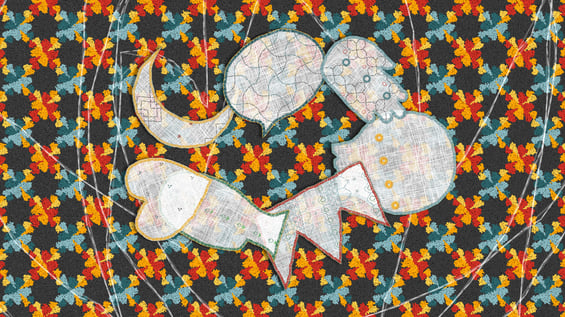
My Juju
As an active act of disobedience, Cornes keeps a couple of small trinkets as mementos. But upon reflection, he realized he carries them for reasons more tied to luck than memory.
He also realized they are not perfectly cut, rendered, nor mass-produced. They are not repeatable, nor could they be, and that is precisely why they matter. They’re valuable to him and nobody else, making them even more significant. This is the core idea of Jujus.
Neo craft
To capture this not-perfect, not-mass-produced quality, and as a firm rejection of logic and efficiency, Nate used code in the most anti-code way: following craft’s philosophy of intentionally avoiding shortcuts.
It took him a record 3000 lines of bending and twisting code to the point where it “forgot” what a straight line is.
And then he taught it that a line is not the shortest distance between two points, but a path to be followed in irregular footsteps, influenced by countless factors along the way—where one might stop, forget the original destination, and end somewhere far more interesting.
He knows this; people know this. Machines do not.
Anatomy of a Juju
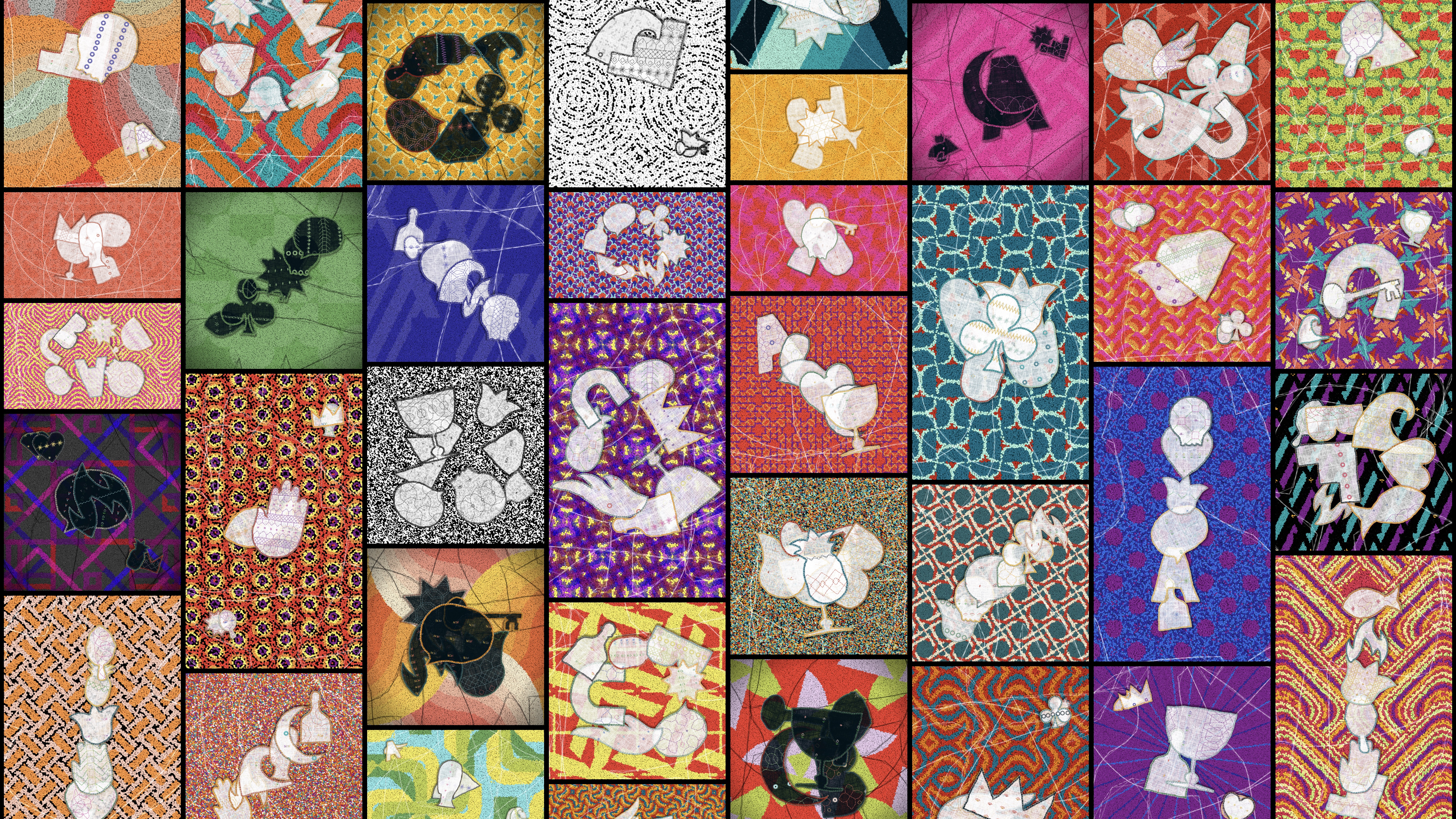
Each Juju consists of two primary elements: the Mat and the Tokens.
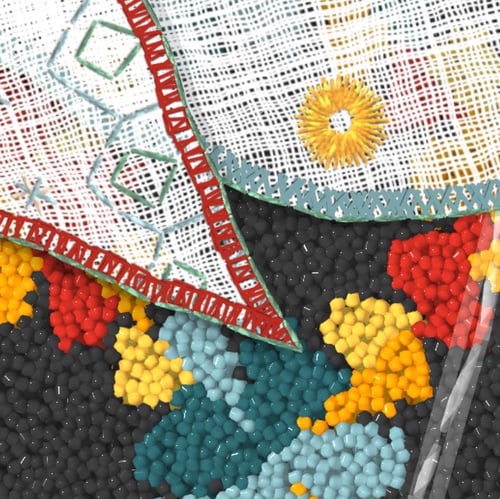
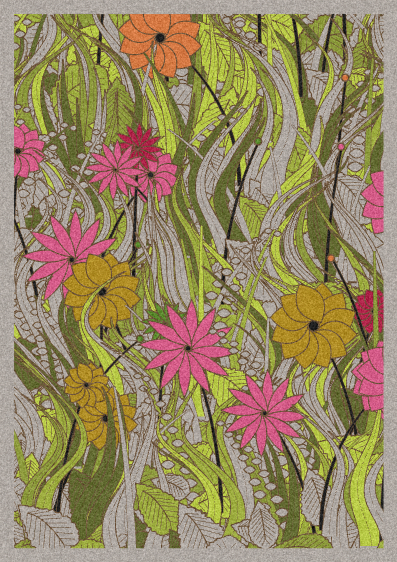
The Mat is a substrate of glass-like particles. Each one is individually designed, making every Mat unique and providing a distinct context.
The Tokens are iconic symbols or ideograms placed on the Mat. Every unique combination of Tokens spells its own, individual message.
The placement of the Tokens on the Mat determines their goal: Luck, Love, Protection or Wish. Collecting a full set of Jujus unlocks an alternate mode: Magik.